The first and last 100 yards.
Delivery has automated the highway, the warehouse, the middle mile. It still stops at the curb — a person carries every order the final stretch, up the steps, through the lobby, to the door. That stretch is the slowest, most expensive part of the trip. We built the robot that finishes it.
The miles are cheap.
The yards are not.
Trucks, vans, and bikes cover the distance for pennies. Then a human courier walks the order from the curb to the customer's hand — across the sidewalk, up the stairs, through the lobby, to the doorstep. That final hundred yards is a sliver of the trip and most of its cost, because it's the one part still done entirely by hand.
look closer — the cost is in the yards, not the miles
Wheels stop at the curb.
Drones stop at the door.
Sidewalk bots get stuck at the first step. Delivery drones can't reach an apartment lobby or a third-floor walk-up. The first and last 100 yards are full of curbs, thresholds, stairs, and doors — built for human legs. To finish the job you need a machine that rolls where it can and steps where it must.
Wheels for the block.
Legs for the door.
Our wheel-leg robot rolls efficiently on flat ground, then climbs the curb, the ramp, and the stairs that stop everything else. It collects at the merchant — the first 100 yards — and carries the order to the customer's door — the last 100 yards. Vans and drones handle the middle; the robot owns the ends.
pick up · roll the block · climb the step · reach the door
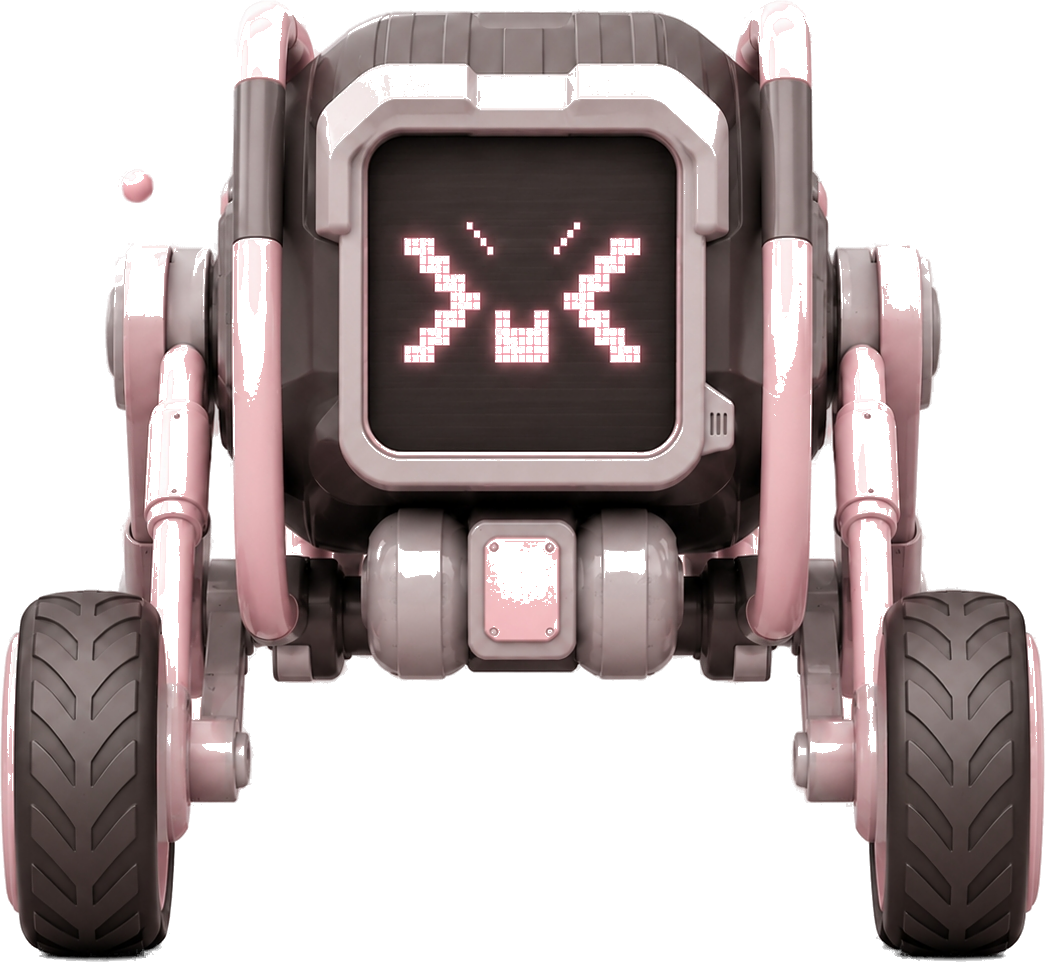
The robot economy
replaces the gig economy.
Today the last 100 yards is labor-bound — one courier, one order, a cost that never falls. A robot runs the same stretch on its own, then the next, and the next. The gig economy was built on people walking the last 100 yards. The robot economy doesn't need them to.
open hand: rush hour · pinch: dispatch an order
It ends
at the door.
The first and last 100 yards is the hardest, most expensive stretch in delivery — and the last one still done by hand. We finish it.
Let's talk→ Unsorted AI, Inc. · first & last 100 yards, finished